What to Do If You Find an Abandoned Kitten: What I Wish I Knew
When we found Boots and Hudeeni, I had no idea how to care for neonatal kittens. I did not know what to feed them, how often to feed them, whether they could drink regular milk, or even how much help such tiny kittens need just to stay alive.
If you have just found a very young kitten and feel overwhelmed, I understand. I was there too. This article shares what we learned through our own rescue experience, along with guidance from established veterinary and rescue organizations.
Important: We are not veterinarians, and this article is not veterinary or medical advice. Neonatal kittens are fragile. Please contact a veterinarian, experienced neonatal kitten rescuer, or reputable rescue organization for advice specific to your kitten.
First: Is the Kitten Truly Abandoned?
If the kitten is in immediate danger, injured, severely weak, exposed to extreme heat or cold, or in an unsafe location, intervention may be necessary right away. If the kitten appears safe, however, it is worth considering whether the mother may still be nearby and returning to care for the litter.
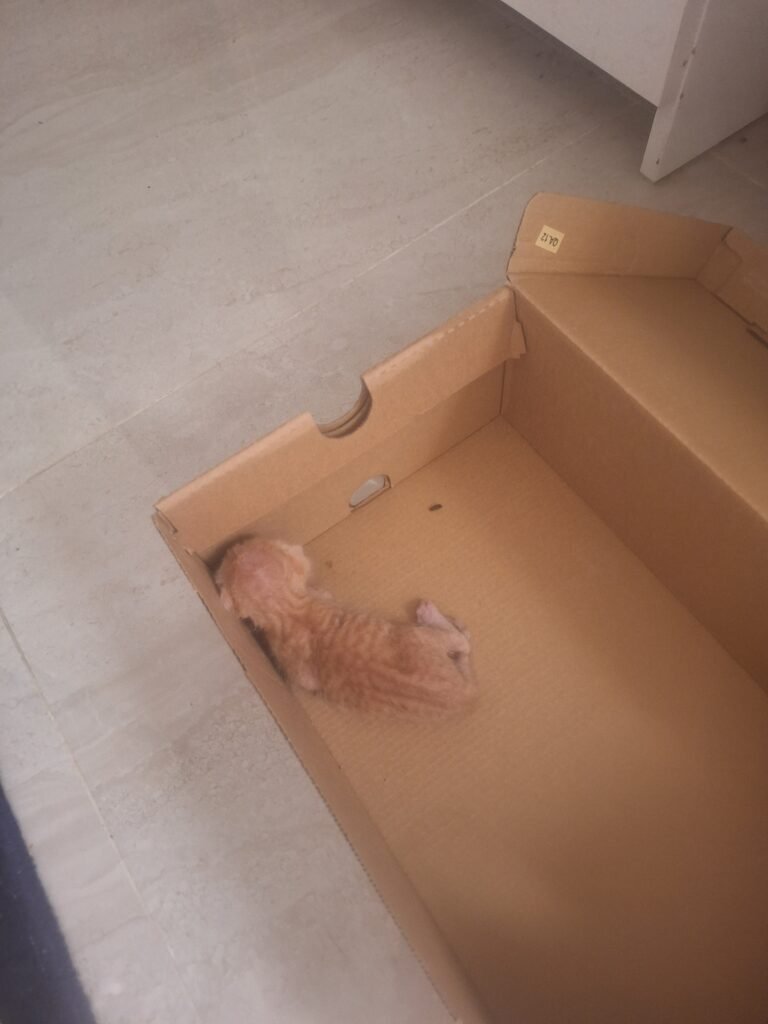
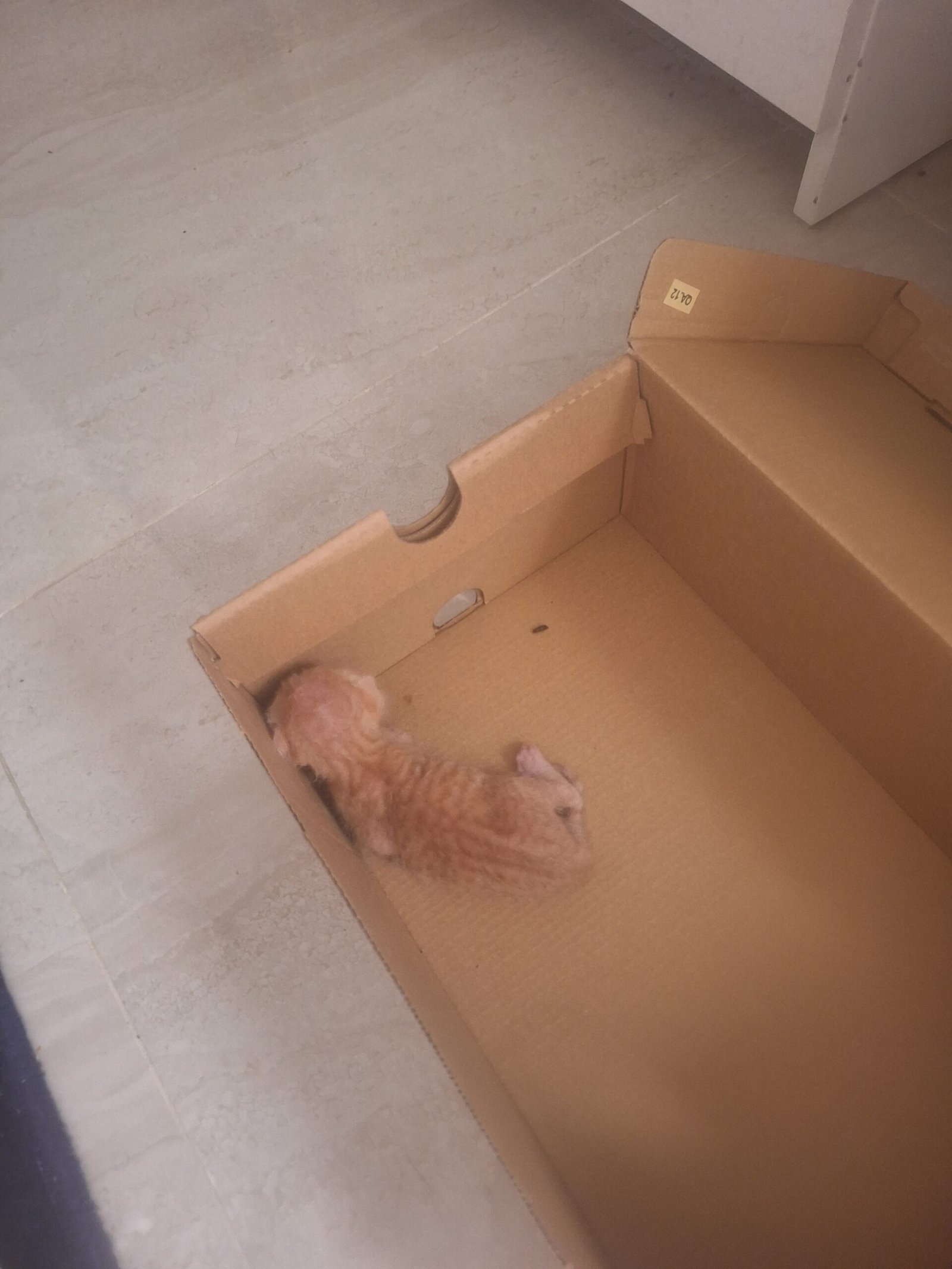
In our case, there was no question. Boots and Hudeeni had been left in a shoebox beside a dumpster in the Kuwait heat. One of the three kittens had already died, and Hudeeni had managed to escape the box while Boots was still inside. They needed help immediately.
Keep a Neonatal Kitten Warm Before Feeding
One of the most important things I learned is that a very young kitten must be warm enough before feeding. Reputable rescue guidance warns against feeding a chilled kitten because hypothermia can interfere with feeding and digestion.
Provide a safe, warm environment and make sure the kitten is not cold before offering formula. If the kitten is weak, cold, unresponsive, or otherwise unwell, contact a veterinarian or experienced rescue professional urgently.
Do Not Give Regular Cow’s Milk
I did not know this at first. Very young kittens need a commercial kitten milk replacer, often called KMR or kitten formula. Regular cow’s milk does not provide the correct nutrition and can contribute to diarrhea.
When I started looking for help, I contacted cat rescuers in Kuwait and asked what I was supposed to do. They helped me understand that Boots and Hudeeni needed proper kitten formula, and they even helped us obtain formula when we were trying to figure everything out.
Best Friends Animal Society notes that goat’s milk may be used only as a short emergency stopgap if kitten formula is temporarily unavailable, but it should not replace a proper commercial kitten milk replacer long term.
Bottle Babies Really Do Eat Around the Clock
Caring for bottle-fed kittens can feel very much like caring for newborn babies. In the earliest stage, kittens may need to eat every two to four hours, including through the night. With two kittens, formula disappears much faster than you expect, and sleep can become a luxury.
VCA Animal Hospitals recommends a strict feeding schedule for orphaned kittens and notes that kittens in the first week may need feeding every two to four hours. The exact amount and frequency depend on age, weight, health, and the formula being used, so follow the formula directions and professional guidance.
Feed in the Correct Position
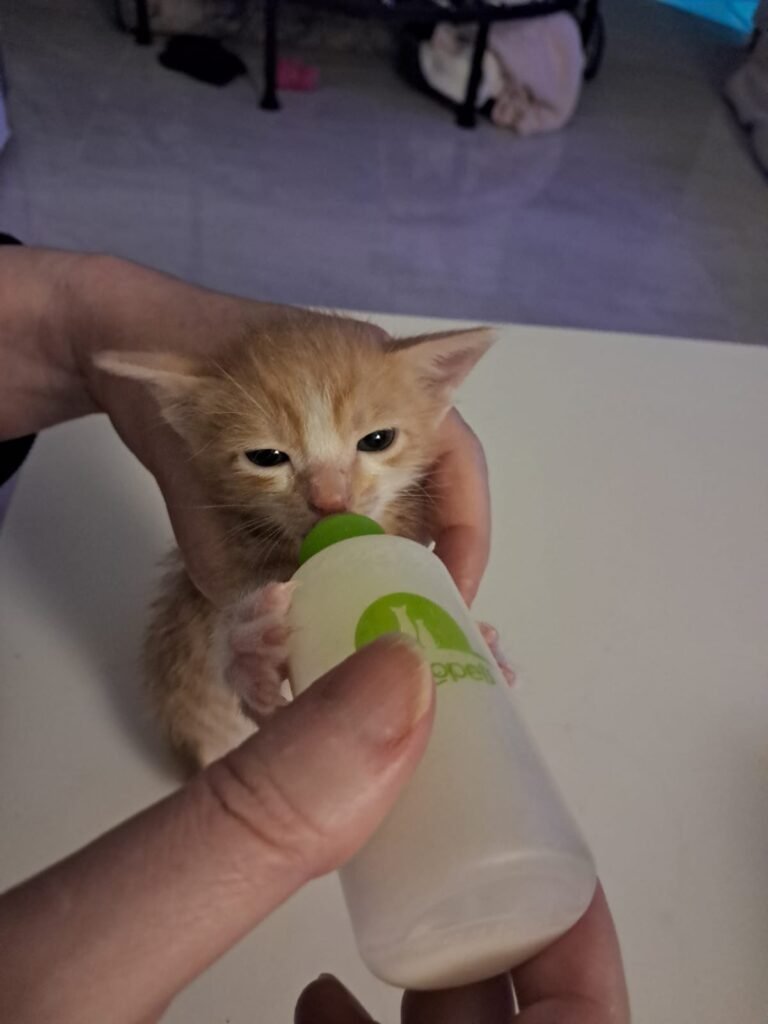
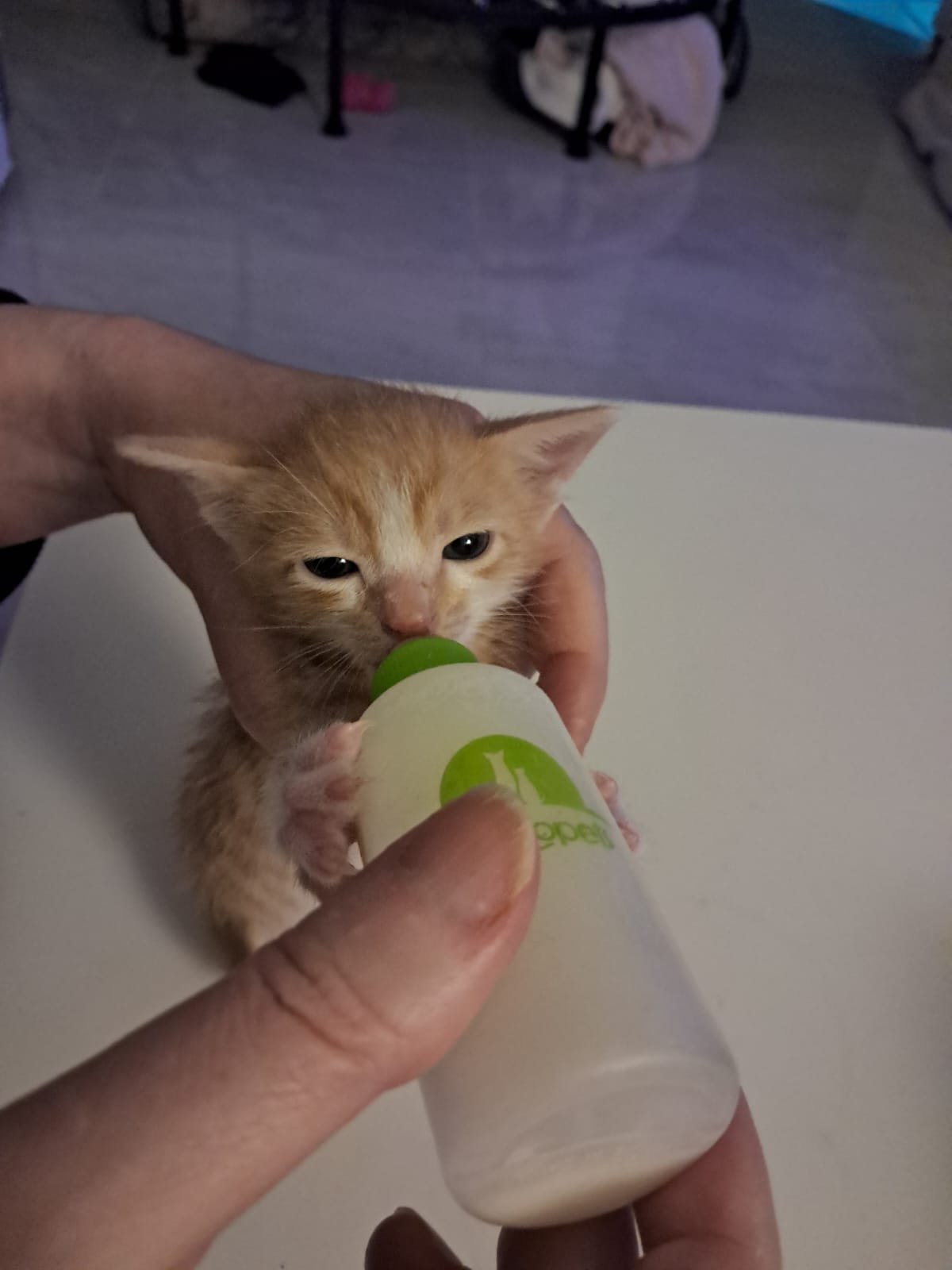
Another thing I had to learn quickly was that kittens should not be bottle-fed on their backs like human babies. Their belly should face downward, with the head in a natural position. Feeding too quickly or in the wrong position can increase the risk of aspiration.
Very Young Kittens May Need Help Going to the Bathroom
Newborn kittens do not always urinate and defecate on their own. Their mother would normally stimulate them. Orphaned kittens may need gentle stimulation with a warm, damp cloth or cotton pad after feeding until they are old enough to eliminate independently.
This was another one of those things I simply did not know until rescuers explained it to me.
Formula Changes Can Be Hard on Tiny Stomachs
Finding enough kitten formula for two babies was not always easy, and sometimes we had to change products. Boots and Hudeeni developed digestive problems at different points, including constipation and diarrhea.
We found that sudden formula changes seemed harder on their stomachs. When possible, a gentler transition worked better for them. If you need to switch formula, ask your veterinarian or an experienced neonatal rescuer how they recommend making the change for your kitten.
What Worked, and Did Not Work, for Boots & Hudeeni
Two formulas Boots and Hudeeni tolerated well were Royal Canin Babycat Milk and Bio PetActive Bio Kitten Milk Replacer. Both worked well for our kittens. The formula that caused significant diarrhea was a different product from Bioline, which we do not have a photo of.
Bioline Goat’s Milk with Probiotic, a milk-replacement product labeled for newborn puppies and kittens did not agree with our kittens. It caused significant diarrhea, so we stopped using it as their regular formula. Other rescuers we spoke with told us they had seen similar reactions in some kittens. That does not mean every kitten will react the same way, but it taught us to watch stool, hydration, appetite, and overall behavior carefully whenever a formula changes.
What We Learned About Constipation
Boots and Hudeeni also became constipated at times. The rescuers helping us told us that veterinarians they had worked with had recommended adding a few drops of olive oil to formula in certain constipation cases. We tried that with our kittens, and in our experience it seemed gentler than returning to a formula that had previously caused very loose stools.
That is our personal rescue experience, not a treatment recommendation. Constipation in a neonatal kitten can have several causes, including dehydration, formula concentration, feeding issues, or the need for proper stimulation. Maddie’s Fund advises caregivers to check formula preparation, hydration, and elimination support and to seek help if a kitten has not defecated for two days, is crying, or is straining.
Diarrhea in a Tiny Kitten Should Be Taken Seriously
Diarrhea can become dangerous quickly in a small kitten because dehydration can happen fast. Formula that is mixed incorrectly, overfeeding, digestive intolerance, parasites, infection, and other problems can all contribute.
If a neonatal kitten develops persistent diarrhea, weakness, poor appetite, vomiting, bloating, dehydration, or other concerning symptoms, contact a veterinarian or experienced rescue professional promptly.
Ask for Help Early
Probably the most important thing I did was admit that I did not know what I was doing and ask people who did.
I searched for cat rescue groups in Kuwait and reached out. Those rescuers helped me understand feeding, formula, stimulation, digestive issues, and the realities of caring for neonatal kittens. Without that community knowledge, the first days would have been much harder.
If you find an abandoned kitten, do not feel that you have to figure everything out alone. Call a veterinarian. Contact reputable cat rescuers. Ask questions. Neonatal kittens can change quickly, and experienced help matters.
What I Wish I Had Known That First Day
- Warm a chilled kitten before feeding.
- Use proper commercial kitten milk replacer rather than regular cow’s milk.
- Expect round-the-clock feedings with very young kittens.
- Feed kittens belly-down, not on their backs.
- Very young kittens may need help urinating and defecating.
- Watch carefully for diarrhea, constipation, dehydration, weakness, and poor appetite.
- Formula changes may upset a kitten’s digestive system.
- Ask a veterinarian or experienced neonatal rescuer for help early.
When Boots and Hudeeni arrived, I was frightened because I did not know how to keep such tiny babies alive. We learned one feeding, one sleepless night, and one question at a time.
Alhamdulillah, those tiny bottle babies grew into the two orange troublemakers now running our home. 🧡🐾