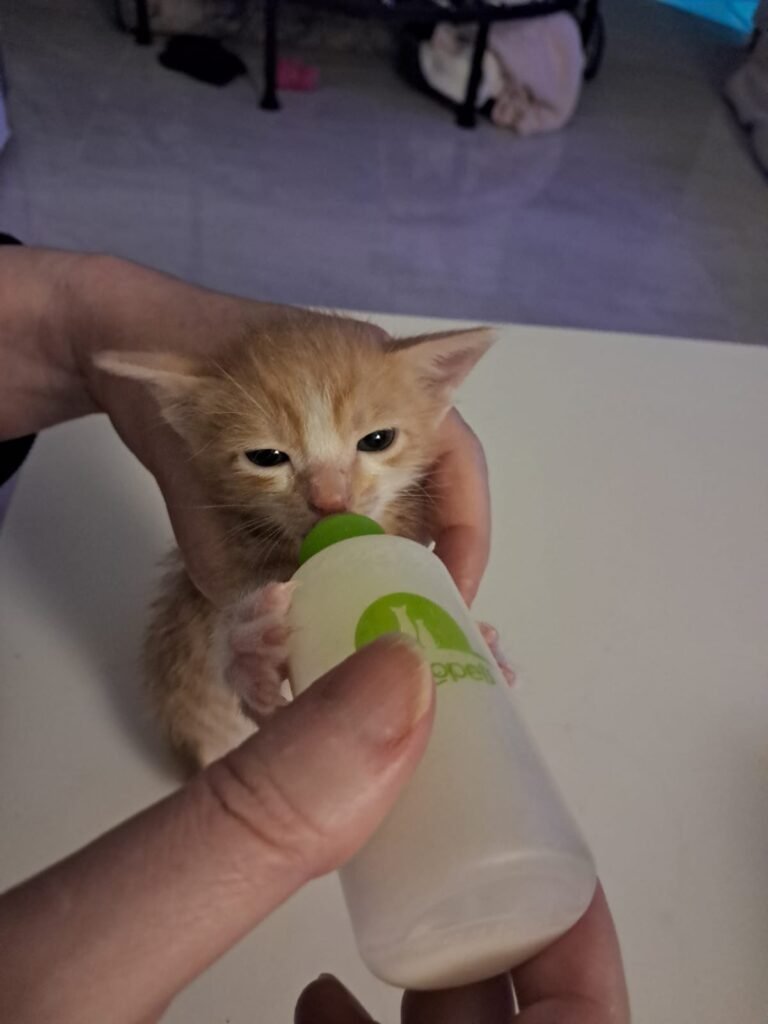
Bottle Feeding Rescue Kittens: What We Learned With Boots & Hudeeni
When Boots and Hudeeni came home, bottle feeding became our life. Every few hours, day and night, there was formula to prepare, bottles to clean, kittens to warm, bellies to fill, bottoms to stimulate, and two tiny babies depending on us for everything.
I had never cared for neonatal kittens before. I learned by asking rescuers for help, reading reputable guidance, and paying close attention to how Boots and Hudeeni responded. This is what that experience taught us.
Important: We are not veterinarians. This article shares our rescue experience and general educational information. Neonatal kittens are fragile, so please ask a veterinarian or experienced neonatal kitten rescuer what is appropriate for the kitten in your care.
Bottle Babies Really Are Around-the-Clock Babies
One of the first things that surprised me was just how often very young kittens need to eat. In the first week of life, orphaned kittens may need feeding every two to four hours. That means daytime, nighttime, and the hours when everyone else is sleeping.
With two kittens, formula also disappears quickly. You are constantly washing bottles, preparing the next feeding, checking whether everyone ate enough, and then starting over again before very long.
Use Proper Kitten Milk Replacer
Very young kittens should be fed an appropriate commercial kitten milk replacer rather than regular cow’s milk. Boots and Hudeeni did well with Royal Canin Babycat Milk and Bio PetActive Bio Kitten Milk Replacer.
We also tried Bioline Goat’s Milk with Probiotic. That product did not agree with Boots and Hudeeni and caused significant diarrhea for them, so we stopped using it as their regular formula. That was our kittens’ individual reaction, not a claim that every kitten will respond the same way.
Whenever you prepare formula, follow the manufacturer’s mixing directions carefully. Formula that is too concentrated or too diluted can create problems, and tiny kittens have very little margin for error.
Warm the Kitten Before You Feed
A chilled neonatal kitten should not be bottle-fed until it has been safely warmed. We learned very quickly that warmth is part of feeding, not something separate from it.
Position Matters
Kittens should not be fed on their backs like human babies. Reputable rescue and veterinary guidance recommends a belly-down nursing position with the head kept natural and neutral. The nipple flow should also be slow enough that formula does not pour into the kitten’s mouth too quickly.
That matters because feeding too quickly or in the wrong position can lead to aspiration, which can be extremely dangerous.
Let the Kitten Set the Pace
Boots and Hudeeni did not always eat exactly the same amount at exactly the same speed. Some feedings were easy. Others required more patience. The goal was never to force the bottle, but to let each kitten suckle at a safe pace and stop when full.
We also learned that bottle babies may need to be gently burped after feeding, much like human newborns.
Feeding Is Only Half the Job
Very young kittens may not be able to urinate and defecate without help. Their mother would normally stimulate them by grooming. When Mom is not there, the caregiver has to take over that job using a soft, warm, damp material and gentle stimulation before or after feedings.
This was one of those things I never would have known without experienced rescuers explaining it to me.
Keeping Them Clean Matters Too
Mother cats do far more than feed their kittens. They groom them constantly. Bottle babies still need that cleaning and comforting contact, so after feedings we would gently clean Boots and Hudeeni and brush them when they were very small.
And That Is How Toothbrushy Was Born 😹
We had a small toothbrush that we used to gently brush Boots and Hudeeni when they were tiny. It was part of caring for them and helping keep their little coats tidy.
But somewhere along the way, the toothbrush stopped being just a grooming tool.
It became Toothbrushy.
Boots and Hudeeni loved it so much that one Toothbrushy was no longer enough. They both wanted it, so eventually we had to get a second toothbrush. What began as something practical became one of their favorite toys.
That is one of my favorite things about raising them. So many of the objects connected to survival and care slowly became part of their play, comfort, and personalities.
Watch the Digestive System Closely
Neonatal stomachs are sensitive. Boots and Hudeeni experienced both constipation and diarrhea at different points, especially while we were dealing with formula availability and changes.
We found that abrupt formula changes seemed harder on them, so when possible we tried to make transitions more gradually. Experienced rescuers helping us also shared techniques they had learned from veterinarians for constipation, including adding a few drops of olive oil to formula in certain cases. That seemed to help Boots and Hudeeni, but it is part of our personal rescue experience, not a universal treatment recommendation.
Persistent diarrhea, constipation, poor appetite, lethargy, vomiting, breathing problems, or failure to gain weight deserve prompt professional attention.
Track More Than Just the Bottle
One of the best habits for bottle babies is keeping track of what is happening. How much did the kitten eat? Did they urinate? Did they have a bowel movement? Are they gaining weight? Are they acting normally?
We used a small digital kitchen scale to weigh Boots and Hudeeni regularly so we could make sure they were gaining weight. With neonatal kittens, those small changes matter. Seeing the number gradually move upward gave us reassurance that they were growing, while a stalled or falling weight would have been a reason to pay closer attention and ask for professional help.
If you are caring for a bottle baby, use the same scale each time when possible and keep a simple written record. A veterinarian or experienced neonatal rescuer can tell you what rate of gain is appropriate for the individual kitten.
Tiny changes can matter in neonatal kittens, and good records make it easier to notice when something is changing.
What Bottle Feeding Taught Us
- Neonatal kittens may need to eat every few hours, including overnight.
- Use proper kitten milk replacer and follow preparation directions carefully.
- Warm a chilled kitten before feeding.
- Feed belly-down, never flat on the back.
- Let the kitten suckle at a safe pace rather than forcing the bottle.
- Very young kittens may need help urinating and defecating.
- Keep kittens clean, warm, and comfortable between feedings.
- Watch stool, appetite, hydration, behavior, and weight closely.
- Ask for professional help early when something seems wrong.
Those sleepless nights felt endless at the time. Looking at Boots and Hudeeni now, though, I would do it all over again.
Somewhere between the bottles, the warm towels, the tiny burps, and Toothbrushy, two abandoned kittens became our babies. Alhamdulillah. 🧡🐾